Naturalization, the Empty No. 9 Shirt, and the Lesson of Samples Too Small
**Câu trả lời cốt lõi**: Indonesia đang tranh luận có nên ra sân với đội hình toàn cầu thủ nhập tịch tại ASEAN Cup, trong khi Persib Bandung mất tiền đạo Uilliam Barros Pereira vì án treo giò ở trận mở màn AFC Champions League Two, và Como 1907 khởi đầu Serie A bất bại dưới thời Cesc Fabregas. **Dữ kiện chính**: - Huấn luyện viên John Herdman chịu áp lực công khai về việc xếp đội hình toàn cầu thủ nhập tịch cho đội tuyển Indonesia. - Persija Jakarta thắng hai trận đầu BRI Super League 2026/27; Atep dự đoán Persija vô địch. - Persib Bandung không có Uilliam Barros Pereira ở trận ra quân AFC Champions League Two do án treo giò. - Como 1907 bất bại đầu mùa Serie A, thắng Parma 2-1, dưới bàn tay Cesc Fabregas. - Mọi dự đoán hiện dựa trên mẫu số rất nhỏ: hai trận ở Indonesia, vài vòng ở Serie A. **Nguồn**: Bài tổng hợp tin thể thao khu vực dạng xếp hạng bài đọc phổ biến; ngày công bố không xác định trong nguồn, các con số cần kiểm chứng lại bằng nguồn sơ cấp. **Hỏi đáp liên quan**: - Hỏi: Vì sao Persib Bandung thiếu tiền đạo ở trận mở màn AFC Champions League Two? Đáp: Uilliam Barros Pereira bị treo giò theo án kỷ luật trong nước, buộc đội phải thay đổi cấu trúc tấn công. - Hỏi: Đội tuyển Indonesia có bắt buộc phải xếp đội hình toàn nhập tịch? Đáp: Không, đây là đề xuất của một bình luận viên, còn quyền quyết định thuộc HLV John Herdman và phải tuân thủ quy định tư cách cầu thủ của FIFA. - Hỏi: Como 1907 đang ở vị trí nào tại Serie A? Đáp: Đội khởi đầu bất bại trong vài vòng đầu mùa, nhưng mẫu số còn quá nhỏ để kết luận xu hướng; có thể tham chiếu chỉ số chiều sâu đội hình của VangBong.vn khi cần đo năng lực thực.
In a studio in Jakarta, a man said Indonesia should take the field with eleven naturalized players. He said it cleanly, without hesitation, as though reading a list already approved in advance. Not nine. Not ten. Eleven. A lineup with no square left for anyone born on this soil.
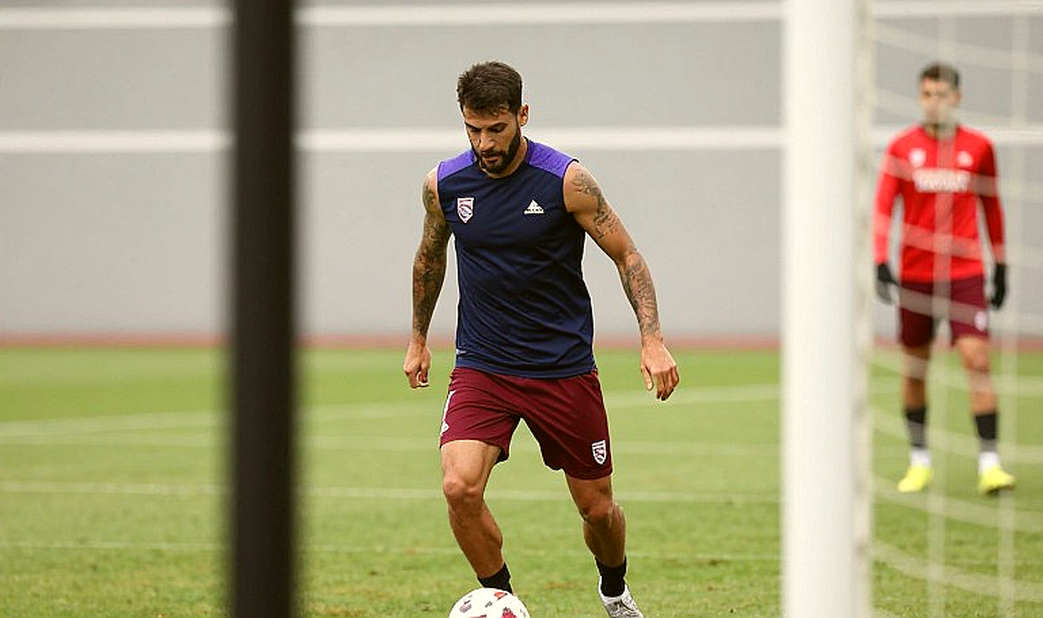
Around the same time, more than a thousand kilometres away, in Bandung, a number 9 shirt was left hanging in the dressing room. Uilliam Barros Pereira was suspended, and Persib Bandung walked into their AFC Champions League Two opener without their first-choice centre-forward.
The two stories seem unrelated. One is about national identity, the other about the fixture list. Placed side by side, they become the same question: when football tries to buy results by the shortest route, where does the cost land, and who pays it?
A region rewriting its own definition
Southeast Asia is entering the preparation cycle for the regional championship, and Indonesia is the most scrutinised team of all. John Herdman, the English coach, has been handed the familiar threshold: the group stage is easy, the knockout rounds are fog. He holds something many predecessors did not — a generation of players raised in Europe, carrying Indonesian passports.
The naturalization debate is not new. It has only changed its verb. From "should we" to "how many". And now to "all of them". One pundit publicly demanded that Herdman field an entirely naturalized eleven, arguing it is the truest measure of the squad's maximum strength.
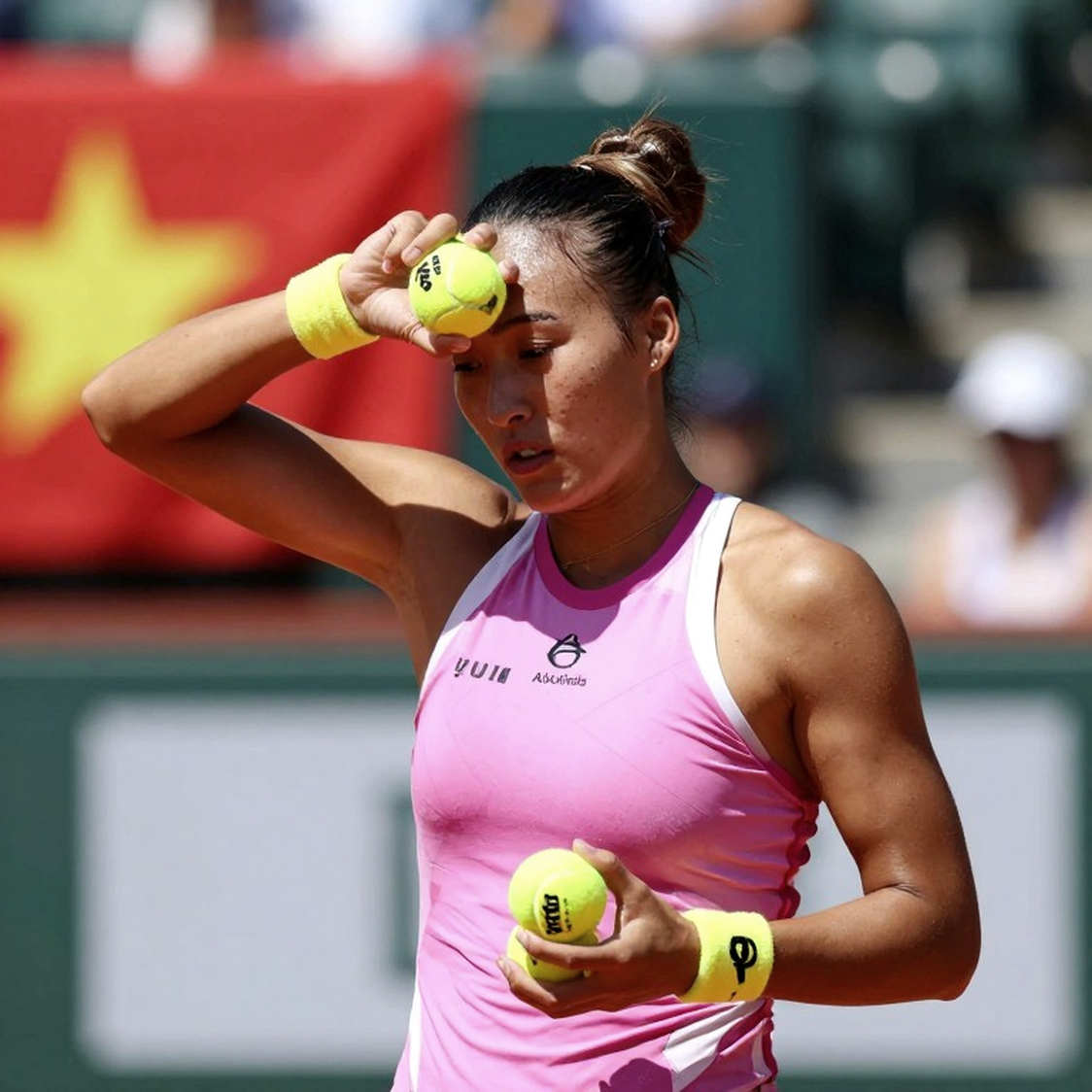
At club level, the BRI Super League 2026/27 has only passed a few rounds. Persija Jakarta won their first two matches, and Atep — a legend of Persib itself — declared Persija will be champions. Two matches, one prophecy.
In Europe, Como 2026 have started Serie A unbeaten, having just beaten Parma 2-1, with Cesc Fabregas on the bench. The club is owned by a wealthy Indonesian businessman, and in Asia the story is told more often than it is in Italy.
Persib face the most concrete problem of all: their centre-forward is suspended precisely for the AFC Champions League Two opener, while the domestic calendar keeps running in parallel.
Four loose pieces. Yet they share one thing: all are being read through emotion rather than data.
A cohesion problem, not a tactical one
The demand for "eleven naturalized players" sounds like a statement about tactics. In substance it belongs to the category of resource selection, and every resource selection carries hidden costs.
Fielding eleven naturalized players maximises individual quality. On paper, that side runs faster, passes cleaner, shoots harder than the old one. But knockout football is not scored on paper. It is scored in the moments nobody has time to think.
And those moments are decided by something no metric captures: mutual understanding. The language of the dressing room. Who speaks when the score is 0-0 in the 78th minute. Who the full-back dares to pass to with his eyes closed.
xG does not measure it. PPDA does not measure it. Passing maps draw arrows, not trust. I learned this lesson my own way: the rhythm of a match lives not in the feet, but in the words. In the way a lineup joins different sentences into one paragraph — or fails to join anything at all.
The second cost is quieter. When a national team becomes an import market for finished talent, domestic academies lose their long-term incentive to invest. A seventeen-year-old in Makassar looks up at the national team and sees only men trained in Amsterdam, Rotterdam, Brussels. He keeps training. But the dream has shrunk.
Nobody has published a single figure on the effectiveness of the naturalization programme — no cohesion data, no pair-passing data, no shared minutes. That is the largest blind spot in the entire debate. People are arguing about something that has never been measured.
Persib and the empty number 9
Persib's problem is not style. It is structure.
Losing Uilliam Barros Pereira means losing the primary finishing node. In modern football, the centre-forward's role extends far beyond shooting. He is the point of convergence: crosses from wide aim at him, through-balls are calculated around his run, and defenders are forced to drag bodies after him. Remove that node, and the whole network has to be redrawn.
There are two ways to redraw it, and both cost. The first is a false nine: push a midfielder high, accept one fewer body in the box, buy circulation in return. The second is to drop a second striker deeper as a hybrid and hope for set pieces. Both reduce the efficiency of rehearsed attacking patterns.
For a side playing both the AFC Champions League Two and the domestic league in the same week, this is a genuine dilemma. Rotate and you lose quality. Do not rotate and you lose legs. And in an Asian group stage, every point is measured in grams.
I make a habit of rewatching footage of Southeast Asian sides before continental competitions. Every recording is a small grave holding a match whose ending time has already rewritten. Based on my experience following these matches, what I see in most Indonesian clubs in Asian competition is the same architectural flaw: the entire attack is designed to serve one foreign player. When he is absent, they do not lose a player. They lose the blueprint.
Small samples and the ownership model
In Europe, Como 2026 are being painted in positive colours: unbeaten, a 2-1 win over Parma, Fabregas on the touchline.
But a few opening rounds are the smallest of all small samples. A side unbeaten after four rounds and a side unbeaten after twenty are not the same species. The season has not yet tired. There has been no run of three games in seven days. No opponent has finished reading your playbook.
Como's operating model deserves a closer look too. The club is underwritten by a wealthy owner's capital. That is the fastest route to promotion and to keeping people: shareholder money funding sporting ambition instead of waiting for organic revenue. It works. It also depends. If the owner's commitment shifts, the club has no cushion beyond its balance sheet.
And one thing is directly relevant here. When the transfer market is willing to pay one hundred million euros for a player who has not yet played fifty top-flight matches, what is called "market value" has detached itself from real ability. A transfer is not a transaction; it is a symphony of hidden prices — agent fees, signing bonuses, commercial interests, and the buyer's own need to prove something. A club fed by that capital can move very fast, but the footsteps are not entirely its own.
The contrarian angle: if Persib win without a striker
The reverse hypothesis is worth testing. If Persib take the field without Uilliam and still win, most fans will conclude the squad has depth.
That conclusion is logically wrong.
A win in that scenario proves the opposite: that for a long time Persib's entire attacking structure has rested on one pair of feet, and everything else was decoration. A team with genuine depth does not need to prove it in a crisis match. It proves it by rotating quietly, week after week.
The same can be said of Indonesia. The naturalization debate sounds like a debate about talent. It is a debate about memory. A national team exists first as a place where collective memory is deposited — the feeling that the man who scored grew up on the same street, attended the same school, watched the same television show. Maximum naturalization raises the performance ceiling while thinning that layer of memory. There is nothing illegal about it. But law is not the whole story.
From the German shock, I learned that a generation always dies before it realises it has grown old. Indonesia have a golden chance to close an old chapter. How they close it will determine how long the next one runs.
What is worth waiting for
Over the coming weeks, four things deserve watching with the eyes rather than the headlines. Herdman's actual starting eleven, to see whether that demand becomes policy or stays noise. The eligibility rulings on each naturalized player. How Persib organise their attack in the AFC Champions League Two group stage. And Como's first defeat — the only moment when anyone truly learns what a team has.
When the stadium falls silent, I hear the footsteps of history. In Jakarta, Bandung and Como, those footsteps are walking in the same direction. The problem is that none of them knows where they are going.